NFL Live Betting: Real-Time In-Game Wagering Odds
 Available in US
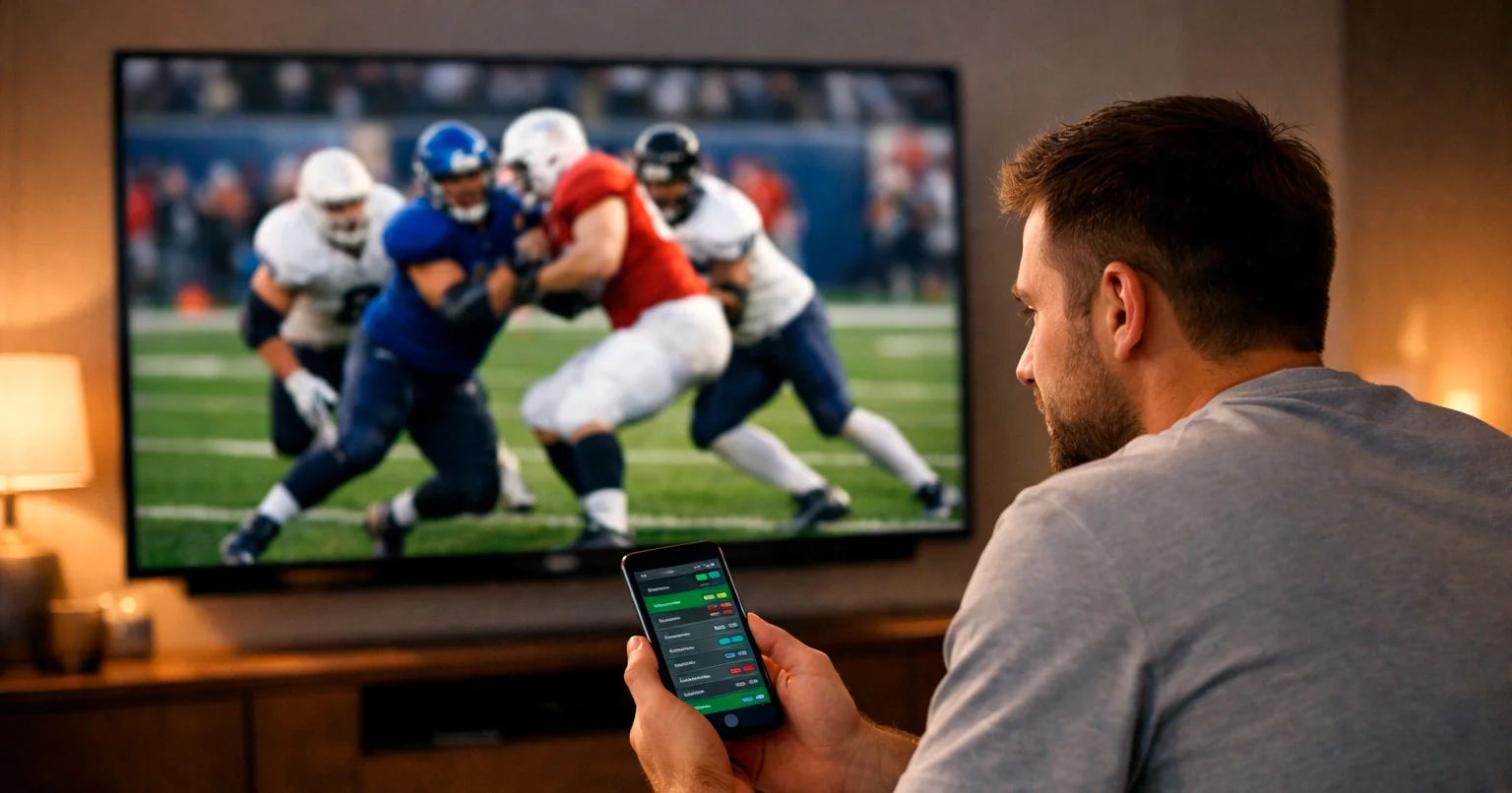
Live betting has fundamentally changed how people wager on NFL games. Instead of locking in positions before kickoff and watching helplessly as events unfold, bettors can now react in real time—adjusting, hedging, or initiating entirely new positions as the game develops. This dynamic creates opportunities that pregame markets cannot offer, but it also introduces risks that catch unprepared bettors off guard.
The growth of in-game wagering reflects both technological advancement and shifting bettor preferences. Sportsbooks now process thousands of live bets per game, with odds updating every few seconds based on score changes, time remaining, and algorithmic assessments of game flow. For bettors willing to watch games actively and think quickly, this environment offers edges that patient analysis can exploit. For those who bet impulsively based on what they just saw, live betting accelerates losses faster than any pregame market.
This guide covers NFL live betting comprehensively—from understanding how real-time markets function to developing strategies that capitalize on the unique inefficiencies live betting presents. Whether you want to hedge pregame positions, find value during momentum swings, or specialize entirely in in-game wagering, the principles here will sharpen your approach.
Before diving into live markets, ensure you have a solid foundation by reading our comprehensive guide to beating the NFL point spread.
NFL Live Betting Odds and Momentum Tracking
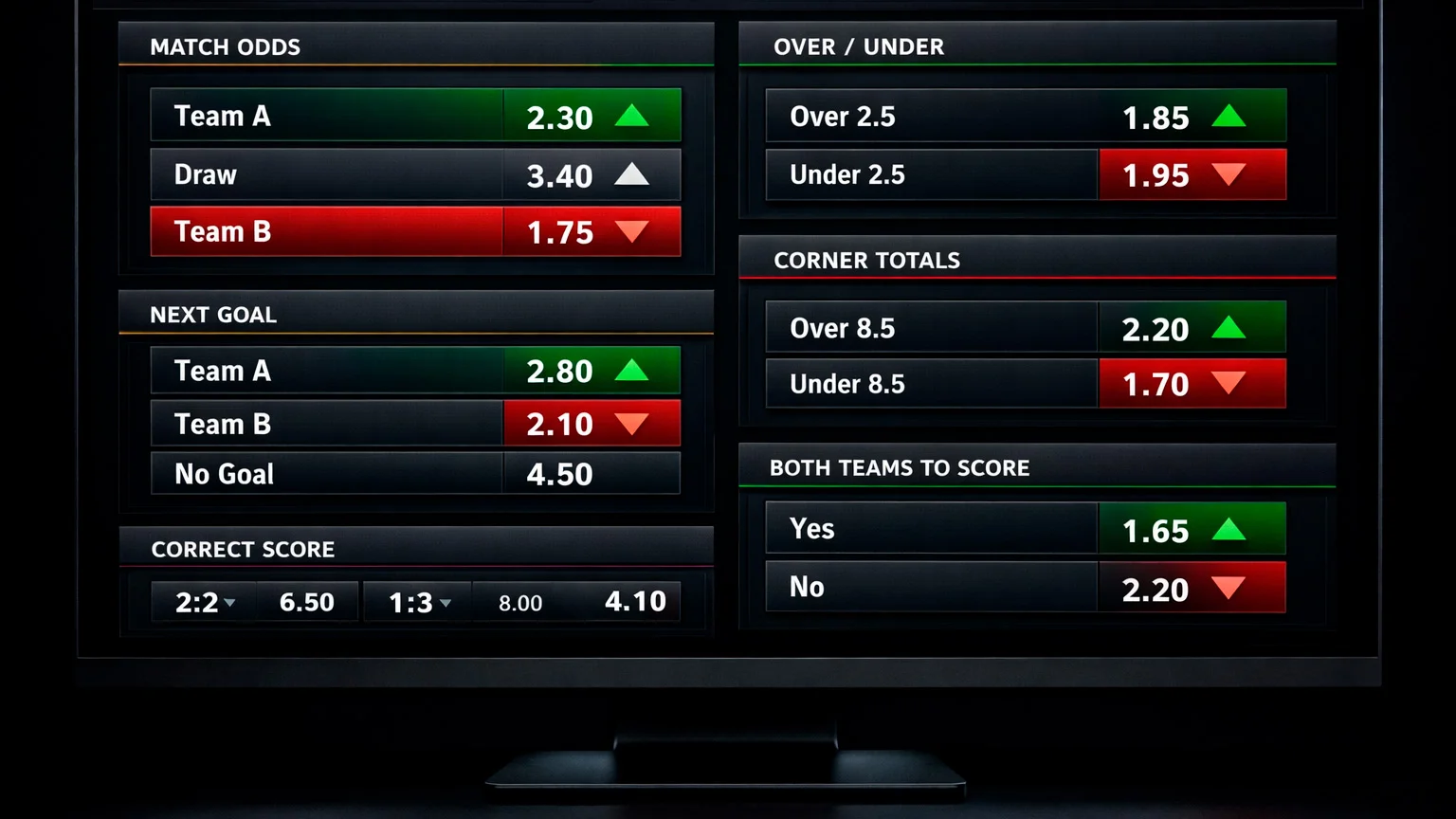
Live betting operates on fundamentally different mechanics than pregame wagering. While pregame lines reflect careful analysis released days before kickoff, live lines respond to what is happening on the field right now. This responsiveness creates both the opportunity and the challenge of in-game betting.
Sportsbooks employ sophisticated algorithms that continuously recalculate odds based on current score, time remaining, field position, down and distance, and various other inputs. These algorithms work remarkably well at pricing obvious situations—a team down 21 points in the fourth quarter correctly shows as a massive underdog. Where they struggle is in assessing subtler dynamics: momentum shifts not yet reflected in the score, injury impacts before medical updates, and coaching tendencies that deviate from algorithmic expectations.
The timing windows for live betting vary by sportsbook and game situation. Most books suspend betting during active plays and reopen with updated odds once the ball is dead. This creates brief windows—typically 20 to 40 seconds between plays—to evaluate new odds and place bets. During high-leverage situations like red zone possessions or two-minute drills, odds may update more frequently or suspensions may last longer as books recalibrate.
Market availability expands during live betting compared to what many bettors expect. Beyond adjusted spreads and totals, most sportsbooks offer live moneylines, team totals, quarter and half lines, and various prop bets that update in real time. Some books provide drive-result betting (will this drive end in a touchdown, field goal, punt, or turnover?) and next-play props. The depth of live markets has grown substantially in recent years, creating more opportunities for bettors who specialize in specific bet types.
The juice on live bets typically exceeds pregame pricing, reflecting the sportsbook’s reduced confidence and the compressed decision-making timeline. Standard live spreads might sit at -115 rather than -110; props can carry -120 or worse. This increased vig means live bettors need larger edges to overcome the house advantage. Casual live betting for entertainment is expensive; profitable live betting requires genuine analytical advantages that justify the premium pricing.
Mobile betting has made live wagering practical in ways that desktop-only environments never could. The ability to place bets while watching a game—whether at the stadium, at a bar, or on your couch—aligns the betting experience with the viewing experience. This convenience comes with risk: the same accessibility that enables quick reactions also enables impulsive decisions. Successful live bettors develop discipline frameworks that prevent the seamlessness of mobile betting from undermining their strategic approach.
Live Betting Markets Explained
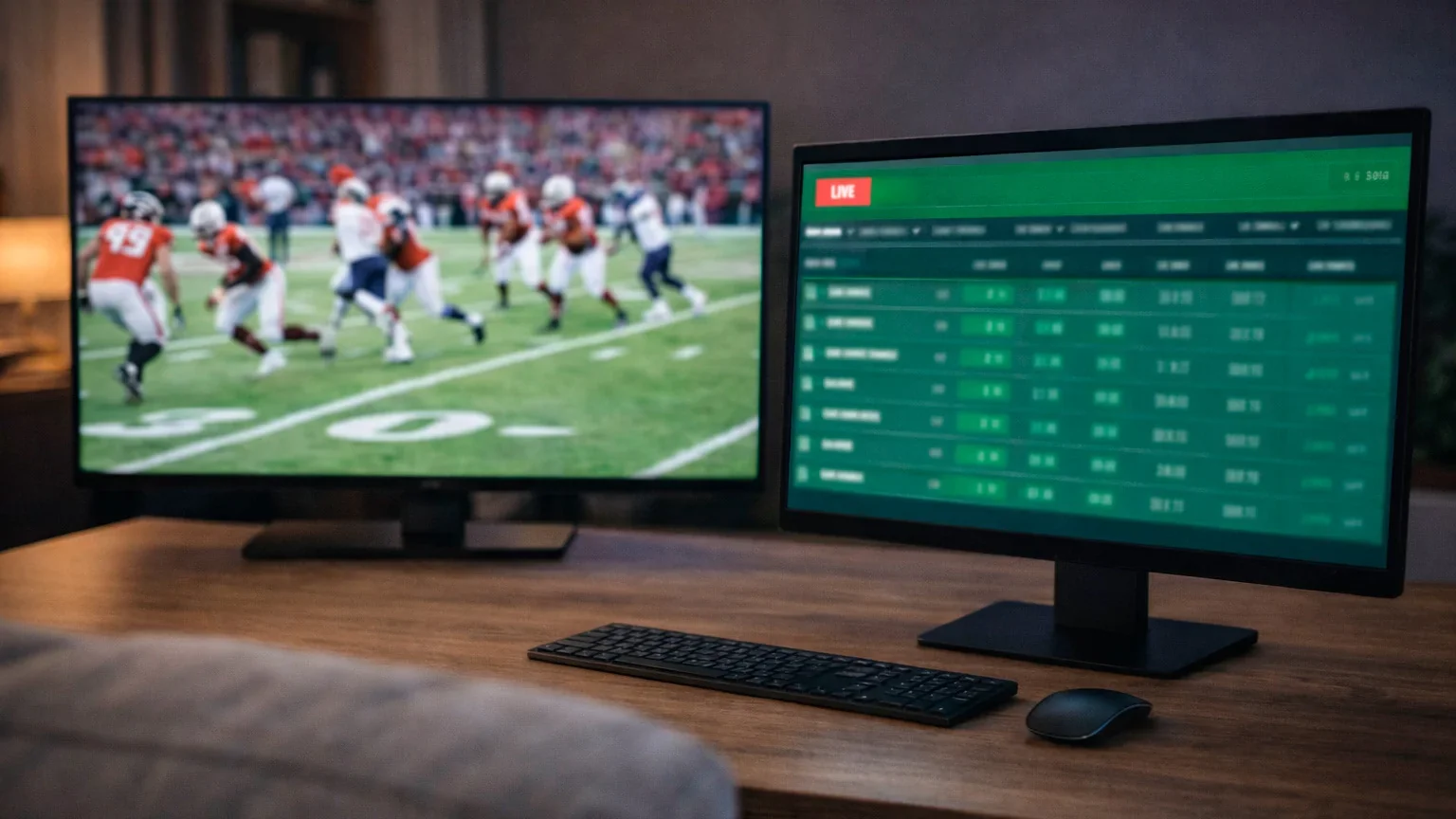
Understanding the full range of available live markets helps bettors identify where their analysis provides the greatest edge. Different market types respond to game developments in distinct ways, creating varied opportunity profiles throughout a contest.
Live Spreads and Moneylines represent the most heavily bet in-game markets. The spread adjusts continuously based on scoring and time elapsed—a team that led by 7 pregame might find themselves as 3-point favorites after falling behind early, or 14-point favorites after building a cushion. Moneyline odds swing more dramatically; a pregame -200 favorite can briefly become a +150 underdog after a bad start, offering substantial value to bettors who trust their pregame assessment over early-game variance.
The relationship between live spreads and pregame analysis provides a key framework for in-game betting. If you believed a team was correctly priced as a 3-point favorite before kickoff, and they fall behind 7-0 early, the live spread might now show them as 3-point underdogs. Your pregame analysis suggested they should win by 3; the live line now requires them only to lose by fewer than 3. This gap between your assessment and the market’s fear-driven adjustment represents potential value—if your pregame analysis remains valid.
Live Totals respond to scoring pace and defensive performance. A game expected to hit 45 points that sits scoreless after the first quarter will see its live total drop below the opening number. Conversely, a quick-strike shootout pushes live totals above pregame expectations. Bettors tracking pace independently of what has already scored can identify situations where live totals have overcorrected or undercorrected based on early-game variance.
Understanding game script helps project where totals will move. A game featuring an early defensive touchdown and subsequent conservative play might have fewer total points than the scoreboard suggests going forward. A back-and-forth contest where both offenses are moving efficiently projects toward continued scoring even if the current total is modest. Live total betting rewards bettors who think about future scoring rather than reacting to what has already happened.
Quarter and Half Betting create discrete betting opportunities within the larger game structure. First-half spreads and totals behave somewhat independently of full-game markets; second-half lines attempt to price only the remaining 30 minutes of action. Some teams consistently perform differently across halves—fast starters who fade or slow starters who adjust—and these tendencies create value in period-specific markets that full-game lines miss.
Second-half betting deserves particular attention because it prices only future action without carryover from what already occurred. If a team trailed 21-0 at halftime but you believe they will dominate the second half, the second-half spread lets you express that view directly. The first-half disaster becomes irrelevant; only your projection for the remaining thirty minutes matters. This clean separation appeals to bettors who feel confident in halftime adjustments or second-half tendencies.
Drive and Next Score Markets offer rapid-fire betting opportunities for those watching games closely. Will this drive result in a touchdown, field goal, punt, turnover, or other outcome? Which team will score next? These markets require quick assessment of current game state—field position, down and distance, offensive momentum, defensive alignment—and provide results within minutes rather than hours.
The high variance of drive-level betting makes it unsuitable for most bettors. Even the best analysis cannot reliably predict individual drive outcomes at rates that overcome the juice. However, certain situations—a team backed up inside their own 5-yard line, or a dominant offense in four-down territory—present clearer probabilities that occasional drive bettors can target selectively.
Reading the Game for Live Bets

Successful live betting requires seeing the game through an analytical lens rather than simply reacting to the scoreboard. Several key factors help identify when live odds have diverged from true probabilities.
Momentum Identification goes beyond simply noticing which team scored last. True momentum involves sustainable advantages in execution—an offensive line suddenly creating consistent push, a defensive scheme adjustment that is confusing the quarterback, or a special teams unit flipping field position repeatedly. Scoring events might reflect momentary luck (a tipped ball interception, a fumble on a routine handoff) rather than genuine momentum shifts. Distinguishing sustainable advantages from random variance separates profitable live bettors from those chasing false signals.
The market often overreacts to scoring events while underreacting to underlying performance changes. A touchdown might swing live odds dramatically, but if that touchdown came from a broken coverage that the defense has already corrected, the odds overcorrection presents value on the scoring team’s opponent. Conversely, a dominant drive that ended in a missed field goal might not move odds much despite suggesting the offense has solved the defense. Watching drives rather than just scores reveals these disconnects.
Scoring Pace Analysis helps project where totals will end up. If both offenses are moving efficiently but red zone struggles have limited scoring, the current pace understates likely final totals. If early touchdowns came from short fields after turnovers, the current pace overstates expected scoring. Calculating possessions remaining and expected points per possession gives you an independent total projection to compare against live market offerings.
Weather changes during games create live betting opportunities that pregame bettors could not anticipate. Rain beginning in the second quarter, wind picking up as the sun sets, or temperature drops affecting ball handling all influence expected scoring in ways live algorithms may not fully capture. Bettors monitoring weather developments can identify when live totals have not yet adjusted to changing conditions.
Injury Impact Assessment requires evaluating news faster than the market incorporates it. When a starting quarterback goes down, live odds react immediately—but do they react correctly? The market might overcorrect if the backup is more capable than general perception suggests, or undercorrect if the injury affects schemes more than the odds reflect. Knowing backup quarterback capabilities, offensive line injury impacts, and defensive personnel depth provides edges in the minutes after injury announcements.
Coaching adjustment recognition distinguishes between teams that will respond to adversity and those that will continue struggling. Some coaches consistently make effective halftime changes; others stubbornly stick with failing approaches. Some teams have second-half histories that suggest they handle deficits well; others routinely collapse when trailing. These tendencies, combined with live game observation, inform whether current odds accurately reflect likely second-half performance.
Second-Half Tendencies deserve systematic tracking. Historical data reveals which teams perform better in second halves, which adjust well at halftime, and which struggle to close games. Combining this historical tendency with live observation—has the trailing team shown signs of figuring out the opponent’s scheme?—produces more accurate second-half projections than algorithms relying primarily on score and time.
The synthesis of all these factors requires practice that most bettors never develop. Reading NFL games for live betting value is a skill that improves with deliberate effort—tracking your live reads against outcomes, identifying where your assessments were accurate and where they failed, and refining your mental models over time.
Find the most competitive odds and expert predictions directly on the NFL Betting homepage.
NFL Live Betting Strategies

Moving from game-reading skills to actionable strategies requires frameworks for identifying and exploiting specific live betting situations. Several approaches have demonstrated value across seasons of NFL live betting.
Buying Low on Favorites exploits the market’s tendency to overreact to early adversity. When a pregame favorite falls behind in the first quarter, live odds often overcorrect—pricing in not just the current deficit but also an implied momentum shift that may not exist. If your pregame analysis determined a team should be favored, and nothing fundamental has changed except a few unlucky plays, the live underdog price on that same team represents enhanced value. The key is distinguishing between random variance (a tipped interception, a fumble on a routine play) and fundamental problems (the offense cannot block, the defense has no answer for a specific formation).
This strategy requires patience and conviction in pregame analysis. Bettors who chase every dip without genuine pregame assessment will buy into bad teams whose early deficits reflect actual inferiority. The edge comes from having done real work before the game and recognizing when live odds have deviated from that informed assessment based on small-sample noise.
Fading Overreactions generalizes the buying-low concept beyond just favorites. Any time a scoring event moves odds dramatically, ask whether the move is proportional to the information contained in that event. A 75-yard broken-play touchdown might swing odds significantly, but if the defensive breakdown was an anomaly unlikely to repeat, the overcorrection creates value on the team that just allowed the score. Markets process scoring events automatically; thoughtful bettors evaluate the meaning behind those events.
The inverse also applies—fading under-reactions when the market has not fully processed meaningful developments. A dominant drive that ended in a fumble at the goal line might barely move odds, but the offensive success suggests future scoring that the market has not priced in. These mismatches between event significance and market response form the core of live betting value.
Second-Half Specialization suits bettors who excel at halftime analysis but lack the rapid-fire decision making that continuous live betting demands. Rather than betting throughout games, second-half specialists wait for the halftime break, assess what they have learned about both teams, and place targeted second-half bets. This approach allows more deliberate analysis than in-game betting while still incorporating information unavailable pregame.
The key to second-half specialization lies in updating pregame assessments based on first-half evidence. Did the favorite’s offense look as capable as expected? Has the underdog shown they can hang with superior competition? Are there schematic adjustments visible that will affect second-half play? Combining pregame research with first-half observation produces second-half projections more accurate than either alone.
Hedging Pregame Positions uses live betting to manage risk on bets placed before kickoff. If you bet a team at -3 and they jump out to a 14-0 lead, you might lock in profit by betting the opponent at a now-favorable live spread. The guaranteed return is smaller than letting the original bet ride, but the variance reduction can be valuable—particularly for larger pregame positions or parlays where one leg has already hit.
Hedge calculations require balancing potential outcomes against guaranteed returns. Online calculators help determine optimal hedge sizing, but the fundamental decision—whether to hedge at all—depends on your confidence in the original bet, your risk tolerance, and the specific numbers available. There is no universal right answer; the best approach varies by situation and bettor preferences.
Contrarian Live Betting recognizes that recreational bettors disproportionately bet live favorites and overs. When a team jumps to an early lead, public money pours in on that team to cover live spreads that have moved against them. This one-way action sometimes pushes lines beyond fair value, creating opportunities for bettors willing to back teams that just fell behind or bet unders in games that started with quick scoring.
The contrarian approach requires distinguishing between situations where public money has distorted lines and situations where the line move is justified. Not every live favorite is overpriced; sometimes early leads genuinely indicate superior teams that will continue dominating. Contrarian betting works best when combined with your own game assessment rather than blindly fading public action.
Live Betting Risks and Discipline

The same accessibility that makes live betting appealing also makes it dangerous for bettors lacking self-control frameworks. Understanding these risks—and implementing structures to mitigate them—separates sustainable live bettors from those who blow through bankrolls on Sunday afternoons.
Emotional Decisions represent the primary threat to live betting profitability. The excitement of watching games while betting on them creates an emotional intensity that pregame betting lacks. A bad beat on one bet tempts immediate revenge betting; a winning streak encourages overconfidence and oversizing. These emotional responses override analytical thinking, leading to decisions that would never survive calm reflection.
Building emotional buffers requires deliberate practice. Some bettors implement mandatory waiting periods—refusing to place any live bet within 60 seconds of a previous bet’s resolution. Others limit the number of live bets per game regardless of perceived opportunities. The specific tactic matters less than having some structure that prevents impulsive betting during emotional peaks.
Setting Live Betting Limits protects bankrolls from the unique risks of in-game wagering. Separating live betting allocation from the overall bankroll creates a hard cap on potential damage during particularly volatile sessions. A bettor might allocate 20% of their NFL bankroll to live betting, with strict rules against exceeding that amount regardless of how good opportunities seem.
Daily and per-game limits add additional protection layers. Limiting yourself to three live bets per game, or stopping live betting after reaching a certain loss threshold for the day, prevents the extended losing spirals that live betting’s rapid pace enables. These limits should be established before games begin—not negotiated with yourself in the moment when you are certain the next bet will turn things around.
Knowing When Not to Bet proves harder in live markets than pregame. The constant availability of new odds creates perpetual temptation; there is always another line, always another opportunity. Disciplined live bettors recognize that most live situations do not present genuine value—the algorithms pricing these markets are quite good, and edges are rarer than the constant parade of available bets suggests.
Selectivity should be the default stance, with bets requiring positive justification rather than absence of obvious problems. If you cannot articulate specifically why a live bet offers value beyond “I feel like this team will come back,” the bet should not be made. This standard filters out the majority of potential live bets, which is exactly what profitable live betting requires.
Managing Multiple Live Positions adds complexity that many bettors underestimate. Having active bets on several games simultaneously divides attention and increases emotional volatility. Each position creates its own stress; combined, they can overwhelm analytical capacity. Better to focus deeply on one or two games than to spread attention across the entire Sunday slate while making suboptimal decisions everywhere.
Conclusion
NFL live betting offers genuine opportunities for bettors who combine game-reading skill with disciplined execution. The key lies in recognizing when algorithms have mispriced situations—when early-game variance has moved odds beyond fair value, when momentum has shifted in ways not yet reflected in the score, or when your pregame analysis remains valid despite surface-level changes.
The risks of live betting scale with its rewards. Emotional decision-making, insufficient bankroll protection, and overtrading all destroy profits faster in live markets than pregame betting allows. Building discipline frameworks before you need them—setting limits, establishing waiting periods, defining bet criteria—protects against the impulsive tendencies that live betting’s accessibility encourages.
Success requires treating live betting as a specialized skill that improves with deliberate practice rather than an extension of recreational viewing. Track your live bets separately, analyze where your game-reading succeeds and fails, and refine your approach over time.
Prepared by the nfl Betting editorial staff.