NFL Parlay and Teaser Betting: Multi-Leg Wagers and Odds
 Available in US

Parlays occupy a peculiar position in sports betting culture. Sportsbooks love them because the house edge compounds with every leg added. Recreational bettors love them because a small stake can produce a massive payout. Sharp bettors typically avoid them—except when they do not. The reality of parlay and teaser betting is more nuanced than either the “sucker bet” dismissal or the lottery-ticket fantasy suggests.
This guide examines NFL parlays and teasers with clear eyes. Yes, the mathematical expectation on most parlays favors the house more than straight bets do. But certain parlay structures, particularly teasers crossing key numbers, can actually provide positive expected value when constructed correctly. Understanding when multi-leg bets make sense—and when they represent pure entertainment spending—separates informed bettors from those funding sportsbook profits.
The explosion of same-game parlays has added another dimension to this discussion. These correlated wagers operate differently from traditional parlays and create opportunities that did not exist a few years ago. Whether you are building a two-team teaser or constructing a complex SGP, the principles in this guide will help you approach multi-leg betting with the strategic clarity it demands.
These multi-leg wagers become especially popular during the playoffs, so make sure to review our Super Bowl betting strategies before the big game.
NFL Parlay Odds and Multi-Leg Betting Mechanics
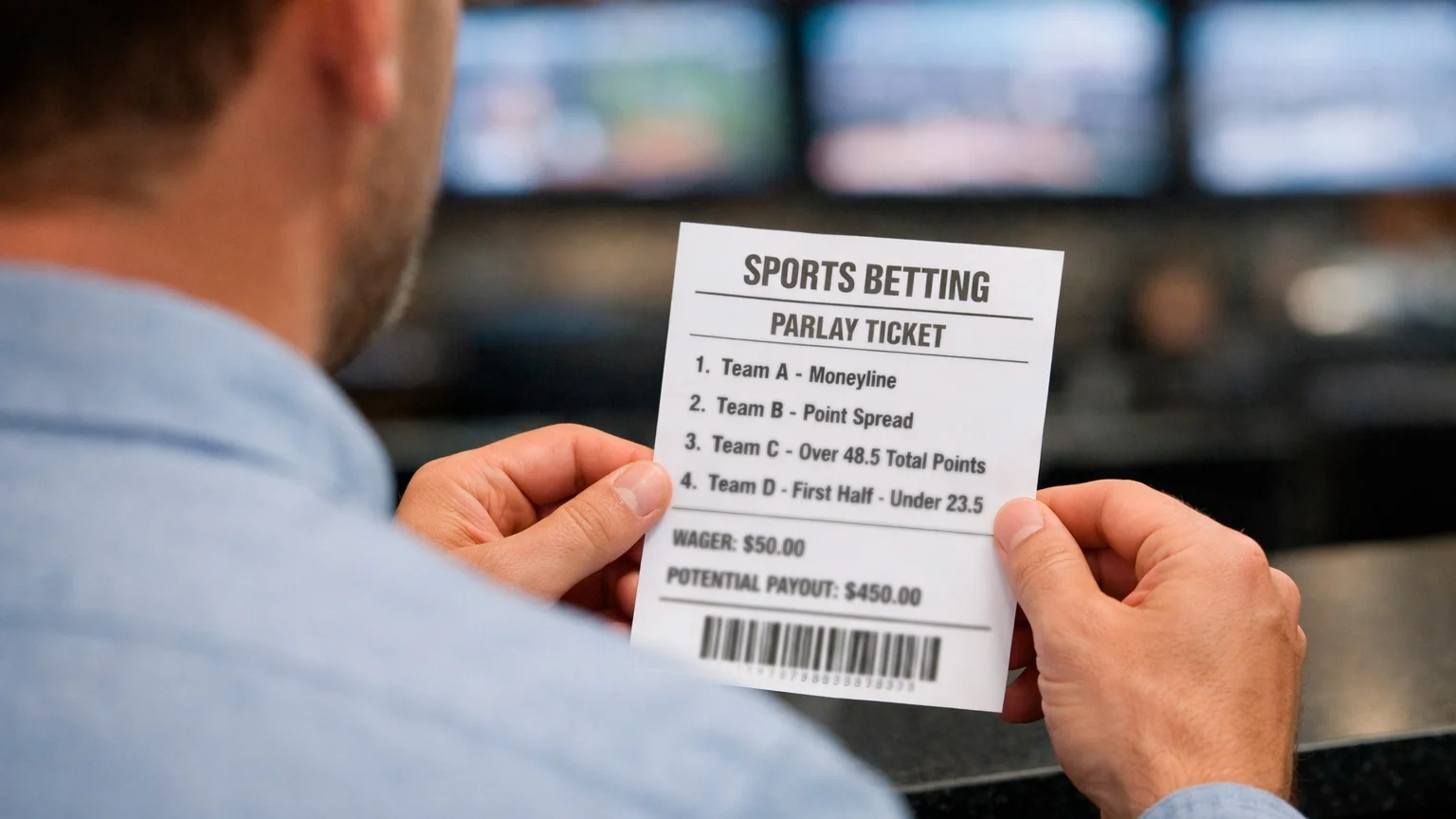
A parlay combines multiple individual bets into a single wager where all selections must win for the bet to cash. The appeal is straightforward: odds multiply across legs, creating payouts that dwarf what any single bet could produce. A two-team parlay at standard -110 odds pays roughly 2.6-to-1; a three-team parlay pays about 6-to-1; a four-team parlay approaches 13-to-1. These escalating returns explain why recreational bettors find parlays irresistible.
The mathematics work against you in direct proportion to the number of legs. Each selection you add multiplies not just the potential payout but also the probability of losing. If you have a 52.4% edge on individual bets—the break-even point against -110 juice—your probability of hitting a two-team parlay drops to about 27.5%. For a three-team parlay, you are looking at roughly 14.4%. By the time you reach five or six legs, the probability of winning shrinks to single digits even with an edge on every individual selection.
Sportsbooks calculate parlay odds using “true odds” that assume each leg is independent, then apply additional juice that varies by operator. The standard payout on a two-team parlay—roughly +260—actually represents worse value than placing two separate bets and reinvesting winnings. This mathematical disadvantage is why sharp bettors generally avoid traditional parlays: the house edge compounds faster than potential winnings justify.
Parlay construction allows mixing different bet types within the same wager. You might combine point spreads, moneylines, and totals across multiple games. Some sportsbooks permit including player props in parlays, though correlation rules often apply that reduce payouts when selections are linked. Understanding what combinations your sportsbook allows—and how they price correlated outcomes—matters for building effective multi-leg wagers.
The minimum and maximum legs permitted vary by sportsbook and bet type. Most books allow two-leg minimum parlays and cap somewhere between 10 and 15 legs maximum. Some operators offer “parlay insurance” promotions that refund stakes if one leg loses, fundamentally changing the expected value calculation. These promotional offers occasionally create positive expectation situations that experienced bettors target specifically.
Despite the mathematical headwinds, parlays serve legitimate purposes within a betting portfolio. Small-stakes parlays can provide entertainment value that exceeds their expected loss—similar to buying a lottery ticket with full awareness of the odds. More strategically, correlated parlays and teasers crossing key numbers can offer genuine edges that single bets cannot capture. The key lies in recognizing which parlay situations warrant serious consideration versus which represent pure gambling entertainment.
Parlay Strategy for NFL Games

Building parlays that offer reasonable value requires abandoning the “lottery ticket” mentality that dominates recreational betting. Strategic parlay construction focuses on situations where combining bets provides advantages that single wagers cannot achieve, rather than simply chasing multiplied odds.
The two-to-three leg parlay represents the sweet spot for serious bettors who choose to parlay at all. Each additional leg beyond three dramatically increases variance while the marginal payout improvement shrinks relative to the added risk. A three-team parlay paying 6-to-1 offers meaningful upside; a six-team parlay paying 40-to-1 almost never hits regardless of handicapping skill. The discipline to limit leg count separates strategic parlay betting from hopeful gambling.
Correlation between legs—whether positive or negative—fundamentally affects parlay value. Positively correlated outcomes, where one result makes another more likely, should theoretically reduce combined odds. Traditional sportsbooks often fail to adequately discount these correlations in cross-game parlays. If you believe a particular team will dominate defensively, parlaying their opponent’s team total under with your spread bet creates a logically consistent position where both legs benefit from the same game outcome.
Negative correlation works against you and should be avoided in parlay construction. Betting a team’s spread and then parlaying that with the same game going over creates conflicting interests—covering a large spread often requires offensive production that pushes totals higher, but high-scoring games can also feature the opponent keeping pace. When your legs work against each other, you have constructed a parlay with worse expected value than the individual odds suggest.
The moneyline parlay strategy deserves specific attention. Parlaying heavy favorites—teams at -300 or steeper—seems attractive because each leg feels nearly certain. The math tells a different story. Three -300 favorites parlayed together pay roughly +170, meaning you risk significant capital for modest returns while any single upset destroys the entire bet. Conversely, parlaying moderate underdogs creates moonshot scenarios where hitting requires multiple surprises. Neither extreme represents sound strategy; moderate favorites in the -150 to -200 range offer the best balance for moneyline parlays.
Shopping parlay odds across sportsbooks matters enormously. Different books calculate parlay payouts using different methods, and the variance can exceed 10% on identical selections. A three-team parlay paying +550 at one book might pay +600 at another—that difference compounds significantly over time. Maintaining accounts at multiple sportsbooks allows capturing the best parlay prices just as you would shop for the best spread.
NFL Teaser Betting Mastery
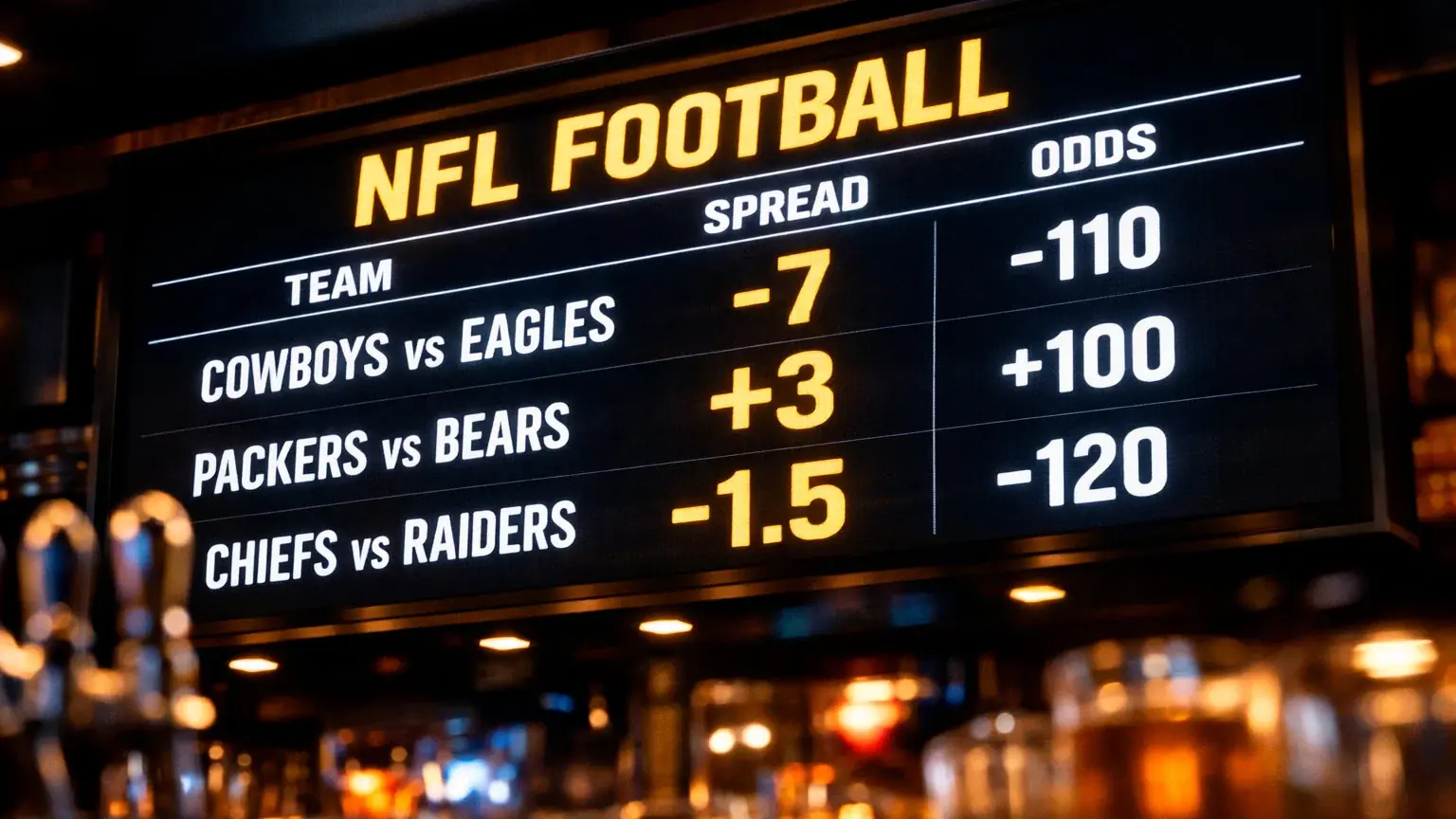
Teasers represent a specific parlay variant where you sacrifice odds in exchange for moving point spreads or totals in your favor. A standard six-point teaser lets you adjust each spread by six points—turning a -7 favorite into a -1 favorite or a +3 underdog into a +9 underdog. The tradeoff comes in reduced payouts; a two-team six-point teaser typically pays around -110 to -120 rather than the +260 a standard two-team parlay would offer.
The mathematics of teasers differ fundamentally from regular parlays, and this difference creates opportunities that sharp bettors have exploited for decades. Because football scoring clusters around specific margins—3, 6, 7, 10, 14—moving spreads across these key numbers provides outsized value relative to the payout reduction. A six-point teaser that moves a spread from -7.5 to -1.5 crosses both the 7 and 3 key numbers, capturing roughly 24% of possible game margins in your favor.
The Wong Teaser strategy, named after gambling author Stanford Wong, identifies the specific teaser scenarios that offer positive expected value. The core principle targets favorites of -7.5 to -8.5 and underdogs of +1.5 to +2.5 in six-point teasers. Teasing a -7.5 favorite down to -1.5 crosses both critical NFL numbers; teasing a +1.5 underdog up to +7.5 accomplishes the same from the opposite direction. Historical data supports these specific windows as profitable over large sample sizes.
The underlying logic makes intuitive sense. Games ending with margins of exactly 3 or exactly 7 occur far more frequently than other margins. A standard spread bet at -7 loses when your team wins by exactly 7 (push) and loses outright when they win by 6 or less. The teased spread at -1 converts all those 3-and-7-margin games into wins while only losing when your team wins by a single point or loses outright—a dramatically narrower loss corridor.
Teaser pricing varies significantly across sportsbooks, and this variance directly impacts expected value. A two-team six-point teaser at -110 offers substantially better value than the same teaser at -120. Some books offer reduced juice teasers at -105 that make the Wong Teaser strategy even more profitable. Others price teasers so aggressively that even optimal selection cannot overcome the vig. Knowing your book’s teaser pricing before constructing these bets is essential.
Seven-point teasers add another point of movement at the cost of worse odds, typically around -130 for two teams. The additional point provides less marginal value than the first six points because it does not cross another key number as efficiently. Six-point teasers hitting the Wong windows generally outperform seven-point teasers unless the extra point specifically crosses into advantageous territory for your particular selections.
Totals teasers deserve mention despite being less discussed than spread teasers. Moving a total from 47 to 41 (six-point under teaser) crosses several scoring thresholds and can offer value in games where you have strong conviction about defensive performance. The math is less clearly favorable than spread teasers because totals do not cluster around key numbers as dramatically as margins of victory. Most sharp teaser bettors focus primarily on spreads rather than totals.
Three-team teasers require all three selections to cover the adjusted spread, and the additional leg dramatically reduces win probability even with favorable number crosses. The payout improvement—typically around +150 to +180 for a three-team six-pointer—rarely compensates for the added risk. Wong’s research specifically recommends two-team teasers; three-team versions dilute the mathematical advantage that makes the strategy viable.
Same Game Parlays: The Modern Multi-Bet Frontier
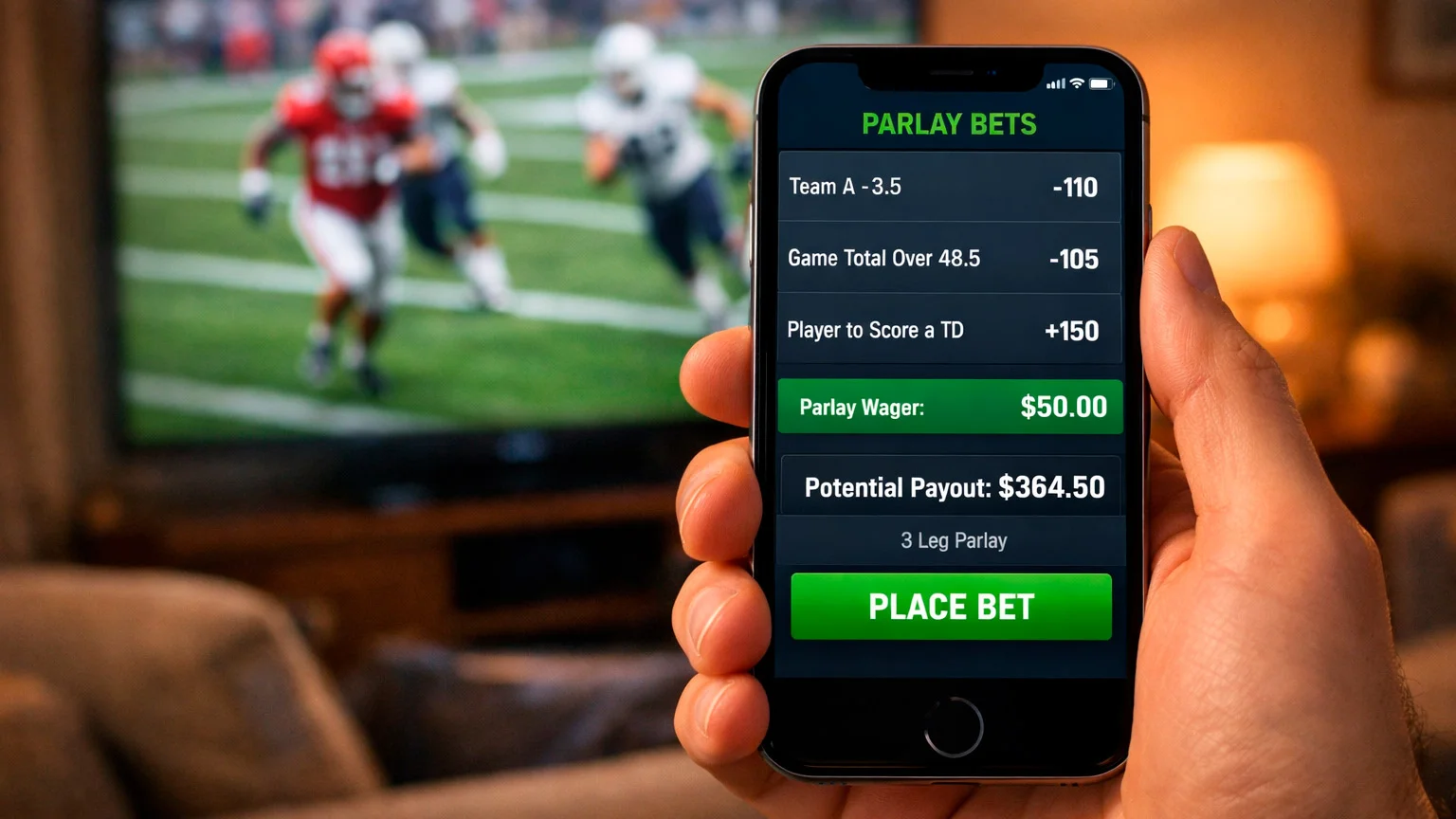
Same game parlays have transformed NFL betting since their mainstream introduction in the late 2010s. Unlike traditional parlays requiring selections from different games, SGPs combine multiple outcomes within a single contest. You might parlay a team’s spread with their quarterback’s passing yards over and the game total under—all from one matchup. This structure creates unique opportunities and pitfalls that traditional parlay strategy does not address.
The fundamental appeal of SGPs lies in constructing cohesive narratives about how a game will unfold. Rather than predicting disconnected outcomes across the league, you build a thesis about a specific contest. If you believe the Dallas Cowboys will control the game through their running attack, an SGP combining Dallas spread, the total under, and their running back’s rushing yards over tells a consistent story. Each leg supports the others within your overall game prediction.
Sportsbooks price SGP odds using proprietary algorithms that attempt to account for correlation between legs. When you add a quarterback’s passing yards over to a parlay already containing that team’s spread, the book recognizes these outcomes are related and adjusts odds accordingly. The key question for bettors is whether these correlation adjustments are accurate—and evidence suggests they often are not, particularly for less obvious relationships.
Building effective SGPs requires understanding which correlations matter and which the algorithms might undervalue. Obvious correlations—like a team covering a large spread while their star player exceeds statistical projections—get priced aggressively. Subtler correlations might escape full adjustment. A game script that favors one team running out the clock affects multiple statistical categories in ways that SGP algorithms do not always capture precisely.
The risk profile of SGPs differs from traditional parlays in important ways. Because all legs come from the same game, a single unexpected development can torpedo every selection simultaneously. An early injury to a key player, a surprising coaching decision, or a weather change affects all your correlated legs at once. Traditional parlays spread risk across independent events; SGPs concentrate it within a single contest’s variance.
Leg count discipline applies even more strictly to SGPs than regular parlays. Sportsbooks actively promote three-leg, four-leg, and five-leg SGPs with attention-grabbing potential payouts. Each additional leg reduces win probability while the correlation discounts eat into expected value. Two or three carefully chosen, strongly correlated legs generally outperform larger SGPs despite less impressive headline odds. The sportsbook’s marketing of big SGPs should itself signal where the house edge is fattest.
Player prop integration represents the primary innovation SGPs offer over traditional parlays. Including a specific player’s statistical performance alongside team-level outcomes allows expressing views that straight bets cannot capture. Believing a game will be a defensive struggle does not just mean betting the under—it might mean parlaying the under with both quarterbacks’ passing yards unders and a defensive player’s tackle over. This precision comes at the cost of complexity and reduced probability.
Maximize your winning potential by following the daily recommendations on our trusted football betting site.
Advanced Multi-Bet Tactics
Beyond basic parlays and teasers, several advanced structures offer tactical flexibility for bettors willing to manage increased complexity. These approaches suit specific situations where standard bet types fall short.
Round robin betting creates multiple smaller parlays from a larger selection pool. If you have four teams you like, a round robin generates all possible two-team or three-team parlays from those selections. The result is several independent parlays where some can win even if not all selections hit. Round robins reduce the all-or-nothing nature of standard parlays while maintaining multiplied odds exposure. The tradeoff is increased total stake—you are placing multiple bets rather than one.
The mathematics of round robins favor bettors who genuinely have edges on their selections. If you identify four games where you believe you have 54% win probability each, a round robin captures value across the full set while surviving individual losses. If your edges are illusory, round robins simply multiply your losses across more bets. Honest assessment of your handicapping strength determines whether round robins help or hurt.
Hedge betting with parlays involves using subsequent wagers to guarantee profit or minimize loss as parlay legs win. Imagine a three-team parlay where two legs have already hit. Rather than riding the final leg with full exposure, you might bet the opposite side straight, locking in profit regardless of the final game’s outcome. The guaranteed return is smaller than letting the parlay ride, but the variance reduction suits certain bankroll situations.
Calculating optimal hedge amounts requires understanding the parlay’s current value and the final leg’s odds. Online hedge calculators simplify this math, letting you input your parlay’s potential payout and the hedging odds to determine stake sizes that guarantee specific returns. The decision to hedge depends on bankroll considerations, risk tolerance, and your confidence in the final leg—there is no universally correct answer.
Live parlay adjustments extend hedging concepts into real-time game situations. As games progress, live betting lines shift to reflect current scores and circumstances. A parlay leg that seemed risky pregame might look nearly certain by halftime, changing your hedging calculus. Some sportsbooks now offer cash-out options on parlays that function as automated hedging, though the offered amounts typically favor the house relative to manual hedging.
Bankroll allocation for multi-leg bets requires adjusting standard unit sizing downward. If your typical straight bet is 2% of bankroll, parlays might warrant 0.5% to 1% stakes to account for their higher variance. Teasers in Wong Teaser spots might justify slightly larger sizing given their demonstrated positive expectation, but still smaller than straight bets. The exact allocation depends on your overall betting volume and tolerance for extended losing streaks that multi-leg variance produces.
Common Parlay and Teaser Mistakes

The errors that undermine parlay profitability follow predictable patterns. Recognizing these tendencies in your own betting behavior creates opportunities for immediate improvement.
Adding legs to chase bigger payouts represents the most common and costly parlay mistake. The psychological appeal of turning +260 into +600 by adding “just one more lock” ignores mathematics that strongly favor restraint. Each additional leg multiplies the ways your parlay can lose. Bettors who consistently build four-leg and five-leg parlays are consistently transferring money to sportsbooks, regardless of their handicapping ability on individual games.
Ignoring correlation—or assuming correlation exists where it does not—leads to poorly constructed parlays. Some bettors parlay obviously connected outcomes without recognizing the correlation discount they are paying. Others assume connections that do not hold statistically. A quarterback throwing for high yardage does not necessarily mean his team covers the spread if that yardage comes in garbage time. Understanding true statistical relationships requires research beyond surface-level assumptions.
Misunderstanding teaser value causes bettors to construct teasers that cannot be profitable long-term. Teasing across non-key numbers provides minimal advantage relative to the payout reduction. Teasing games that do not fit Wong Teaser criteria—favorites outside the -7.5 to -8.5 window or underdogs outside +1.5 to +2.5—sacrifices the mathematical edge that makes teasers worthwhile. Random teaser construction performs worse than random straight betting in most scenarios.
Failing to shop parlay and teaser odds leaves significant value on the table. The variance in multi-leg pricing across sportsbooks often exceeds the variance in straight bet pricing. A two-team parlay might pay +260 at one book and +280 at another—an 8% difference on identical selections. Teasers vary even more dramatically based on juice structure. Betting multi-leg wagers without comparing prices across books guarantees you are often accepting suboptimal terms.
Overconfidence after parlay wins creates dangerous patterns. Hitting a four-team parlay produces a rush that straight bet winners rarely match, and that emotional high encourages repeating the behavior. The reality is that variance delivered a positive outcome from a negative expectation bet. Confusing good luck with good process leads to systematically unprofitable parlay habits. Tracking results over large sample sizes—not individual memorable wins—reveals true performance.
Neglecting bankroll management for parlays accelerates losses during inevitable cold streaks. Because parlays lose more frequently than straight bets regardless of handicapping skill, appropriate stake sizing is essential for survival. Bettors who maintain discipline on individual game sizing often abandon that discipline for “small” parlay stakes that accumulate into significant losses. Every parlay ticket should fit within a defined multi-leg allocation that represents a small fraction of straight bet sizing.
Conclusion
Parlay and teaser betting rewards disciplined, mathematically informed bettors while punishing those who chase big payouts without understanding the underlying odds. The house edge on most parlays exceeds straight bets, but specific structures—particularly Wong Teasers crossing key numbers—can offer genuine positive expected value when constructed correctly.
Same game parlays add a new dimension to multi-leg betting, allowing cohesive game narratives that traditional parlays cannot express. The correlation adjustments built into SGP pricing create a constant negotiation between your game view and the sportsbook’s algorithm. Winning that negotiation requires understanding which correlations the market prices accurately and which it does not.
Limiting leg count, shopping prices aggressively, and maintaining strict bankroll discipline separate strategic parlay bettors from those contributing to sportsbook profits. The parlays worth making are rarely the parlays that feel most exciting.
Written by the editors at nfl Betting.